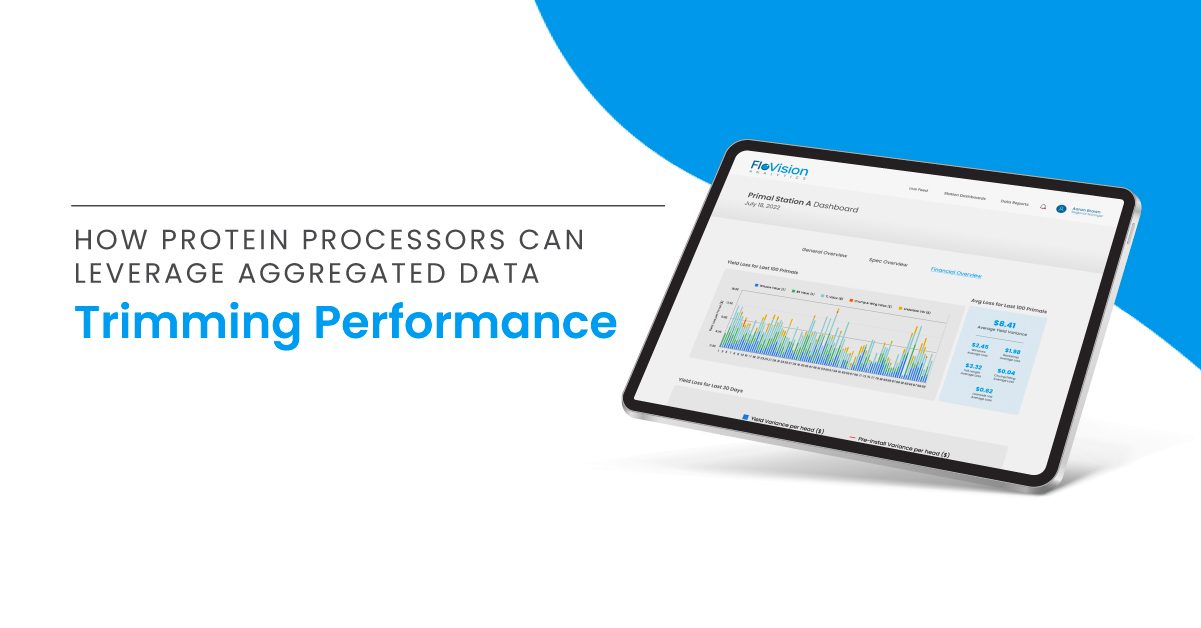
Aggregated data can help protein processors get performance metrics on their production, which can be difficult to quantify otherwise.
Since butchering outcomes vary based on the meat and the butcher, aggregated data gives processors a comprehensive understanding of trends and opportunities to streamline. Processors can use meat quality, trimming performance, and production process data to inform production decisions and produce higher quality products.
Protein processors can lose yield on trimming performance due to butcher overtrimming and lack of visibility for management on trimming errors. Butchers can use data trends to identify specific areas of improvement in their trimming process, and boning hall managers can similarly use this data to provide butchers with individualized training. Managers can adjust butcher station assignments to ensure the most accurate butchers are working with the highest value products.
Explore our striploin primal aggregated data tool for protein processors, FloVision Primal.