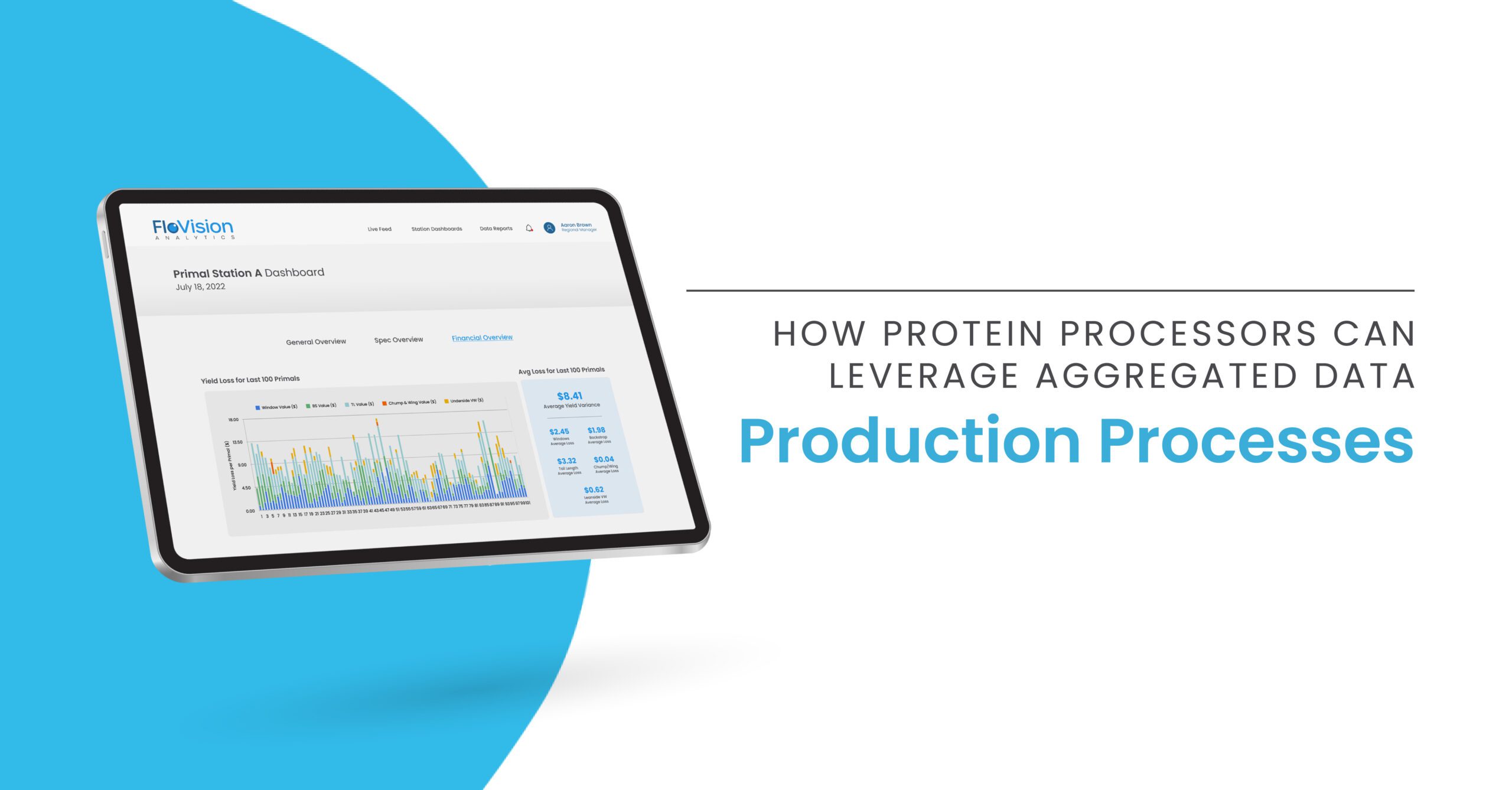
Many of the processes in meat processing require optimization to get the most valuable and highest quality product, which can be achieved with aggregated data.
In production, managers observe the butchering process and divert cuts to specific customers based on their spec. This relies on managers making repeated singular decisions, whereas aggregated data can reveal spec trends and determine new process strategies.
Management can also use data to identify areas where product is categorized inaccurately, such as visual lean (lean point) trims, and correct errors to get the most value for the yield. They can further enhance these lines by leveraging pricing data and dividing body fat and lean to the most valuable breakdowns. Collected data can also inform plant managers about optimal staffing conditions and the best time to perform specific tasks.
Overall, aggregated data is an important tool for protein processors as it helps them improve their yield and product quality. By using this information to identify areas of improvement and optimize processes, processors can provide higher-quality products to their customers and maximize their profits.
Explore our sirloin primal aggregated data tool for protein processors, FloVision Primal.